

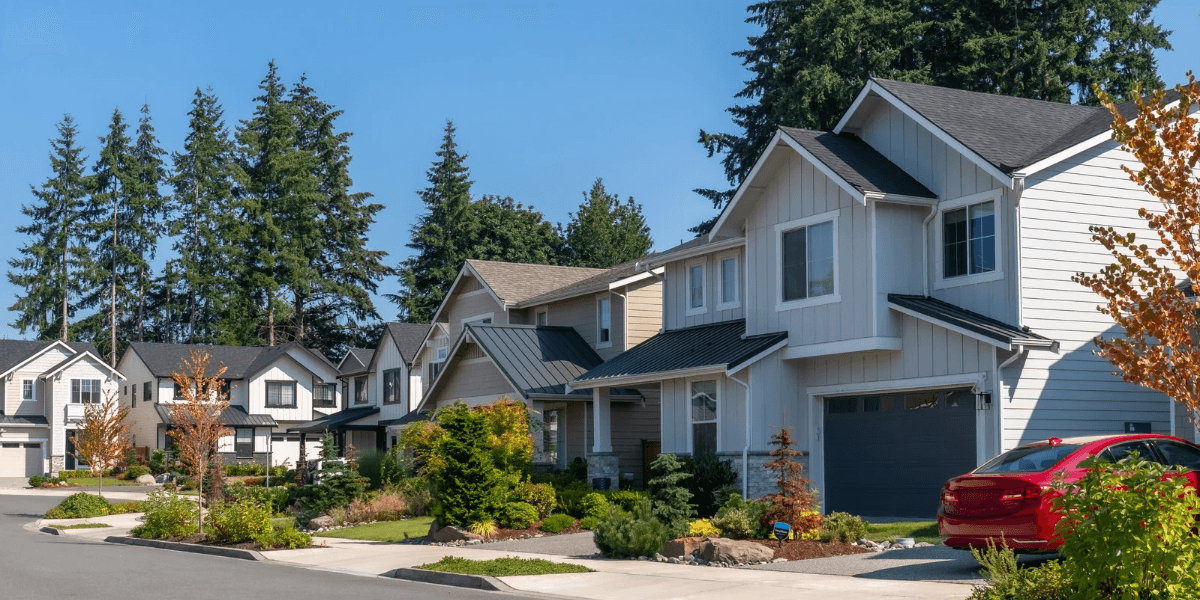
The federal housing regulator raises the baseline conforming mortgage limit to $855,400 for eligible U.S. properties in 2027.
The Federal Housing Finance Agency announced an increase in the baseline conforming loan limit for 2027, raising the maximum mortgage amount that Fannie Mae and Freddie Mac can acquire for most one-unit properties to $855,400.
The November 24 announcement represents an increase of $22,650 from the 2026 baseline limit of $832,750. The adjustment reflects changes in average U.S. home values and will affect mortgage financing thresholds across most of the country beginning in 2027.
The decision is an important development for residential real estate because conforming loan limits influence which mortgages can qualify for purchase by the two government-sponsored enterprises. Those enterprises play a major role in the secondary mortgage market, helping maintain liquidity for lenders and supporting the availability of conventional home financing.
Why the Conforming Loan Limit Matters
Conforming loans are mortgages that meet the eligibility requirements established by Fannie Mae and Freddie Mac, including applicable loan-size limits.
When lenders originate eligible mortgages, they may sell them to these enterprises. The process allows lenders to recover capital and use it to support additional lending activity.
Loans exceeding the applicable conforming limit are generally classified as jumbo mortgages.
Jumbo loans operate under different financing conditions and may involve different lender requirements, pricing structures, underwriting standards, and borrower qualifications.
The annual adjustment therefore affects an important distinction within the mortgage market.
By increasing the baseline limit, FHFA allows eligible conventional mortgages to reach a higher principal amount without automatically crossing into jumbo-loan territory.
However, the adjustment does not guarantee that borrowers will qualify for larger mortgages. Income, debt obligations, credit history, down payments, property values, and lender underwriting standards continue to determine individual eligibility.
How the 2027 Adjustment Was Calculated
Federal law requires FHFA to adjust the baseline conforming loan limit annually according to changes in average U.S. home prices.
The agency's calculation uses its House Price Index, which tracks changes in residential property values.
According to FHFA, the expanded-data index showed that average home prices increased approximately 2.72 percent between the third quarters of 2025 and 2026.
The 2027 baseline limit was therefore increased by the same percentage.
The change demonstrates how housing market movements influence mortgage financing rules.
When home values rise, the conforming loan limit can increase to reflect the higher cost of purchasing residential property. When values decline under the applicable statutory calculation, the adjustment may operate differently.
The annual process is intended to keep mortgage eligibility thresholds connected to the changing value of the national housing market.
Higher Limits in Expensive Housing Markets
The baseline limit does not apply uniformly to every U.S. county.
Federal law provides higher conforming loan limits for designated high-cost areas where local median home values exceed the national baseline threshold.
For 2027, the ceiling for one-unit properties in high-cost areas will increase to $1,283,100.
That amount represents 150 percent of the national baseline limit.
The special framework recognizes that housing prices differ substantially across geographic markets.
Metropolitan areas with higher property values may require larger mortgages even when buyers purchase homes comparable in size and characteristics to those available in less expensive regions.
The new ceiling provides additional financing flexibility in qualifying locations.
Separate statutory provisions also apply to Alaska, Hawaii, Guam, and the U.S. Virgin Islands. Their baseline and ceiling limits for one-unit properties will be higher than the standard amounts.
FHFA stated that higher conforming limits will apply in all but 24 U.S. counties or county equivalents because of changes in home values.
Implications for Buyers and Mortgage Lenders
The increased limit may affect buyers searching for properties near the previous conforming threshold.
In markets where home prices have risen, some purchasers may find that a mortgage amount previously classified as jumbo financing falls within the revised conforming limit.
This distinction can matter because lenders may offer different terms and underwriting conditions for conforming and jumbo loans.
However, the actual benefit depends on lender pricing, borrower qualifications, and the availability of suitable properties.
Mortgage lenders will also need to update their loan origination systems, underwriting procedures, documentation, and internal compliance processes to reflect the new limits.
Real estate agents and mortgage professionals must understand the applicable county thresholds when discussing financing options with buyers.
For homebuilders, the change provides additional context for evaluating potential buyer financing capacity in different markets.
It does not directly increase housing supply or reduce property prices, but it may influence the financing environment for eligible purchasers.
The Secondary Mortgage Market
Fannie Mae and Freddie Mac occupy central positions in the U.S. housing finance system.
Their mortgage purchases support a continuous flow of capital through the lending industry.
According to FHFA, the two enterprises and the Federal Home Loan Bank system support more than $8.7 trillion in funding for mortgage markets and financial institutions.
The annual conforming loan limit adjustment is therefore more than an administrative update.
It affects the size of mortgages that can enter a major part of the country's secondary housing finance market.
The new limits also require coordination among lenders, mortgage technology providers, loan servicers, and housing finance institutions.
Effective Date and Industry Preparation
The revised limits apply to eligible mortgages delivered to Fannie Mae and Freddie Mac beginning January 1, 2027.
Loans delivered under the applicable 2026 requirements must continue following the previous limits.
The transition requires lenders and other industry participants to prepare for the new thresholds before the effective date.
The FHFA announcement provides county-level information and supporting documentation to help the industry identify applicable limits.
A Changing Financing Environment
The 2027 conforming loan limit increase reflects the continuing relationship between property values and mortgage financing.
For buyers, lenders, brokers, and developers, the adjustment provides an updated framework for evaluating residential financing opportunities.
Although higher limits do not resolve broader affordability challenges, they establish a larger threshold for mortgages eligible for acquisition by Fannie Mae and Freddie Mac.
The November 24 decision represents an important annual development for the housing industry as participants prepare for the next year of residential lending and property transactions.

Top Listings Contributor
Covers market analysis and property technology, tracking where the data and the tools are pushing the industry next.
This article features partner, contributor, or branded content from a third party. Members of the Top Listings editorial staff were not involved in the creation of this content. All views and opinions are those of the contributor alone.


Related Posts