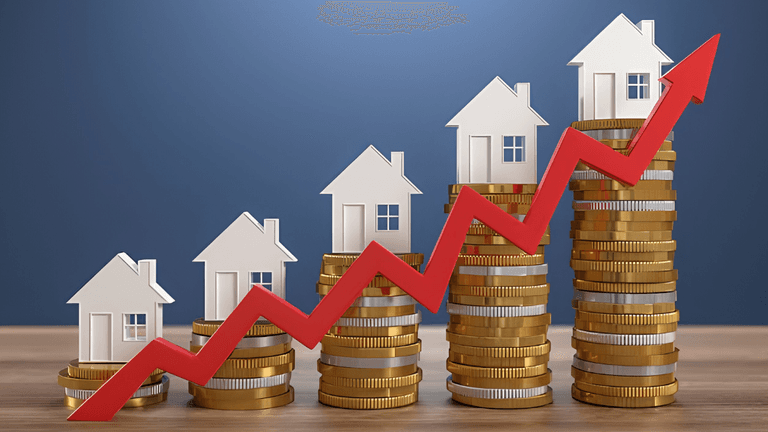


Mortgage rates remained close to 7% as the U.S. housing market entered the final weeks of the summer selling season, keeping borrowing costs at the center of decisions for buyers, sellers and real-estate professionals.
The benchmark 30-year fixed mortgage rate had recently eased to 6.65%, marking a second consecutive weekly decline. Despite the modest improvement, borrowing costs remained higher than they were a year earlier and continued to limit the purchasing power of many households.
The latest conditions illustrate the complicated position of the housing market. Mortgage rates have moved lower at times, but the declines have not been large enough to fundamentally change affordability for many prospective buyers.
Mortgage rates are influenced by several factors, including inflation expectations, Federal Reserve policy and yields on longer-term government bonds. Because those forces can change quickly, housing professionals have been closely monitoring financial markets for indications of where borrowing costs may head next.
The current environment is particularly important for buyers who require financing. A mortgage rate near 7% can significantly increase the monthly cost of purchasing a home compared with the rates available during the pandemic-era housing boom.
That difference has changed the calculation for many households. Some prospective buyers have delayed purchases, while others have reduced the price range of homes they are considering.
Higher borrowing costs have also affected existing homeowners. Millions of homeowners obtained mortgages at unusually low rates in previous years. Selling a home and purchasing another property could mean replacing a low-rate mortgage with a much more expensive loan.
That financial difference can discourage homeowners from moving, creating what industry analysts often describe as a mortgage-rate lock-in effect.
The result is a housing market in which demand is constrained by financing costs while supply remains uneven. Some metropolitan areas have accumulated substantially more inventory, while others continue to have relatively few homes available for sale.
The regional differences are significant. New construction has added supply in parts of the South and West, while some Midwest and Northeast markets continue to experience tighter inventories.
For real-estate agents, the market requires a different approach from the conditions that prevailed when homes routinely attracted multiple offers. Buyers are generally more sensitive to monthly payments, while sellers may need to pay closer attention to pricing and market time.
The latest rate movement nevertheless provides a small degree of relief. A decline from 6.67% to 6.65% is minor, but sustained reductions could gradually improve purchasing conditions if they continue.
The challenge is that mortgage rates do not operate independently of home prices. Even if financing becomes somewhat cheaper, buyers can still face affordability problems if property prices remain high relative to household incomes.
Housing affordability has become one of the central issues in the market. A household must consider not only the mortgage payment but also property taxes, insurance, maintenance and other costs associated with homeownership.
The combination of those expenses can make the difference between qualifying for a home and being able to comfortably afford it.
The late-summer market also carries seasonal importance. Many families prefer to complete moves before the beginning of the school year, traditionally making summer one of the busiest periods for residential transactions.
As that period winds down, sellers who have remained on the market for an extended period may become more willing to negotiate.
At the same time, buyers who postponed decisions earlier in the year may return if they believe financing conditions are improving.
Real-estate professionals will therefore be watching several indicators rather than mortgage rates alone. Inventory, new listings, price reductions, pending sales and days on market will all help determine whether the market is becoming more balanced.
The current environment does not resemble the dramatic housing downturns associated with previous financial crises. Instead, it reflects a slower adjustment in which elevated borrowing costs are reshaping demand and encouraging more cautious decisions.
For the industry, the significance of the latest mortgage-rate data lies in what it says about the broader market. Financing remains expensive, but buyers have more choices in many areas than they did during the severe inventory shortages of the pandemic years.
The direction of rates over the coming months will remain critical. A sustained decline could encourage more buyers and sellers to re-enter the market, while another increase could prolong the current period of cautious activity.
For now, the U.S. housing market continues to operate in an environment where affordability, financing costs and inventory are closely interconnected.

Top Listings Contributor
Covers market analysis and property technology, tracking where the data and the tools are pushing the industry next.
This article features partner, contributor, or branded content from a third party. Members of the Top Listings editorial staff were not involved in the creation of this content. All views and opinions are those of the contributor alone.

Related Posts