
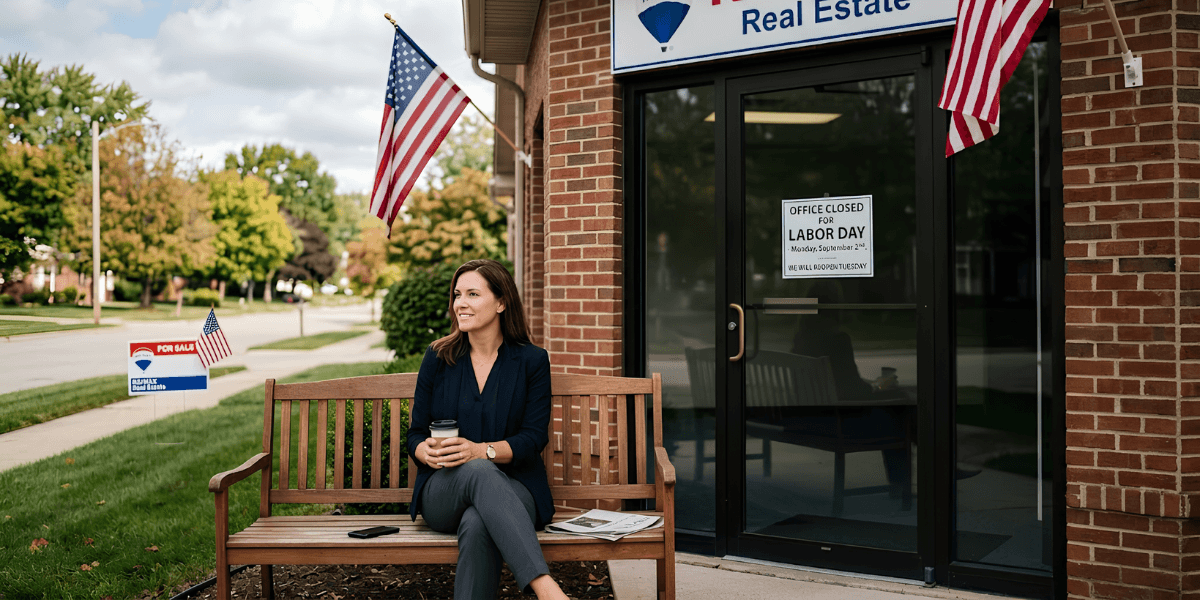
The U.S. real estate industry is observing Labor Day with offices, associations and professional organizations across the country temporarily closing or operating on holiday schedules, creating a brief pause in an industry that normally depends on continuous coordination among agents, brokers, lenders, property managers and clients.
Labor Day does not directly change housing law or property-market fundamentals, but the holiday affects the operating rhythm of the real estate business. Many Realtor associations, brokerage offices and related organizations suspend normal operations, while transactions already underway continue through a combination of digital communication and advance planning.
A Short Pause in a Continuous Market
Residential and commercial real estate rarely stops completely for a holiday.
Property searches remain available online, listings can continue receiving inquiries, and buyers and sellers can communicate electronically. Property managers and other professionals responsible for urgent issues may also maintain emergency coverage.
However, many administrative and professional services operate on reduced schedules.
Real estate associations around the country list Labor Day closures, while some offices resume regular operations the following business day. The holiday can therefore create a temporary slowdown in activities that require multiple professionals to coordinate.
Mortgage lenders, title companies, inspectors, appraisers and government offices may also have different holiday schedules, depending on their operations.
Timing Matters in Real Estate
The effect of a one-day holiday can be more significant for transactions with strict deadlines.
Real estate deals frequently depend on several parties completing tasks in sequence. A delay involving an appraisal, inspection, financing document or title-related process can affect the timing of subsequent steps.
Digital systems have reduced some of the disruption.
Electronic signatures, online document management, virtual meetings and cloud-based transaction platforms allow agents and clients to continue handling many tasks remotely.
Even so, digital tools cannot replace every function that depends on an office, government agency or third-party professional being available.
That makes holiday calendars an operational consideration for agents and transaction coordinators.
The Residential Market Keeps Moving
The broader housing market does not stop because offices close.
Buyers can continue researching homes, reviewing listings and comparing properties. Sellers can continue monitoring interest in their homes, while property owners and landlords can receive inquiries through online platforms.
The holiday weekend can also generate additional consumer attention to housing because people may have more free time to browse listings or discuss potential moves with family members.
That does not necessarily translate into immediate transactions.
Real estate decisions typically involve longer timelines and multiple stages, making the effect of a single holiday difficult to isolate from broader market conditions.
Commercial Real Estate Also Feels the Holiday
Commercial property activity can be affected as well.
Office buildings, retail centers, industrial facilities and other commercial properties operate under varying schedules. Some retail properties remain busy because of holiday shopping and travel, while traditional office environments may experience substantially lower activity.
Property managers must account for building access, security, maintenance and emergency response during reduced staffing periods.
Industrial and logistics properties can have different schedules depending on tenant operations.
The diversity of commercial real estate means there is no single Labor Day pattern across the industry.
Technology Reduces Some Disruption
One of the most visible changes in modern real estate is the industry's growing dependence on digital tools.
Electronic contracts, virtual property tours, online listing platforms and automated transaction systems allow professionals to perform many tasks outside traditional office hours.
PropTech has therefore helped make the industry more flexible.
However, technology does not eliminate the need for human coordination. Real estate transactions still involve inspections, financing, legal documentation, physical property access and other activities that require people and institutions to participate.
Labor Day provides a useful example of that balance.
What the Holiday Means for the Industry
For real estate professionals, the holiday is less about a major change in housing fundamentals and more about operational timing.
The temporary closure of offices can slow some processes while leaving other parts of the market fully active.
The experience also illustrates the increasingly hybrid nature of real estate. Digital platforms keep listings, communication and documentation moving even when physical offices are closed.
As the industry resumes normal schedules after the holiday, buyers, sellers, agents and property professionals return to a market shaped by the same underlying factors that existed before the weekend.
Labor Day may briefly slow the machinery of real estate, but it does not stop it.

Top Listings Contributor
Covers market analysis and property technology, tracking where the data and the tools are pushing the industry next.
This article features partner, contributor, or branded content from a third party. Members of the Top Listings editorial staff were not involved in the creation of this content. All views and opinions are those of the contributor alone.


Related Posts